Private Limited Company Definition: Guide to UK Structure, Tax Perks, and Registration

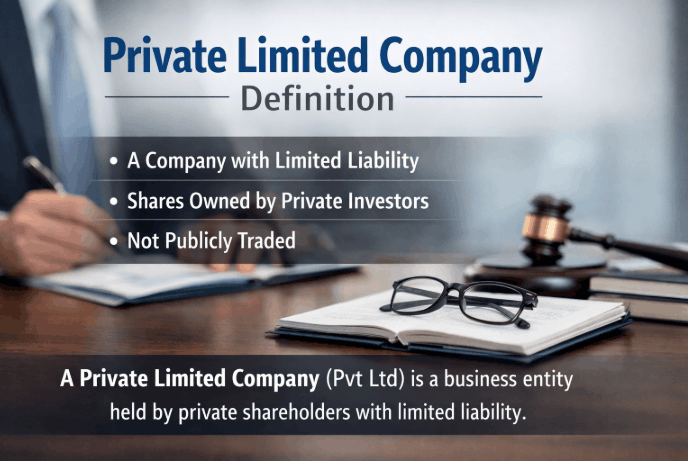
A private limited company is a business incorporated under the Companies Act 2006 that holds a distinct legal identity separate from its owners. Registered with Companies House and identified by the “Ltd” suffix, it is the most common business structure in the UK, offering shareholders limited liability protection on their personal assets.
Key Takeaways
- According to the Federation of Small Businesses, over 2 million private limited companies are actively trading in the UK, making it the dominant formal business structure.
- Private limited companies pay Corporation Tax on profits to HMRC: 19% on profits up to £50,000 and 25% on profits above £250,000, with marginal relief applying between those thresholds.
- A private limited company is legally separate from its owners. Shareholders’ personal assets are not at risk beyond the value of their unpaid share capital.
What Is a Private Limited Company Under UK Law?
A private limited company holds a distinct legal identity under the Companies Act 2006, entirely separate from the individuals who own or manage it. It is registered with Companies House, carries the “Ltd” or “Limited” suffix in its name, and can own assets, enter contracts, and incur debts in its own right.
Two types exist in the UK. A company limited by shares is owned by shareholders and is used by businesses trading for profit.
A company limited by guarantee has guarantors instead of shareholders and is used predominantly by charities and non-profit organisations. The vast majority of trading businesses choose the limited by shares structure.
The Economic Crime and Corporate Transparency Act 2023 introduced identity verification requirements for all directors registering with Companies House.
Anyone incorporating a new private limited company in the UK must now complete identity verification as part of the registration process. This requirement applies from the point of registration and has no equivalent in older competitor guidance.
Founders weighing up incorporation against other business models may find it useful to first understand what is enterprise, before settling on the structure that best suits their commercial goals.

How a Private Limited Company Is Structured?
A private limited company operates through a defined structure of ownership and management. Its core elements are:
- Shareholders own the company. Each shareholder holds one or more shares representing their proportion of ownership. Shares in a private limited company cannot be sold to the general public and are typically held by founders, co-owners, or private investors.
- Directors manage the company on a day-to-day basis. At least one director must be a natural person aged 16 or over. In small companies, the same individual frequently acts as both sole director and sole shareholder.
- Share capital is the total value of shares issued. There is no minimum share capital requirement for a private limited company. Many small companies issue a single share at a nominal value of £1.
- Articles of Association set out the internal rules governing how the company is managed, including voting rights and dividend distribution.
- Memorandum of Association is a formation document signed by all initial shareholders confirming their agreement to incorporate the company.
- Persons with Significant Control (PSC) Register records any individual who holds more than 25% of shares, voting rights, or significant influence over the company. This register is publicly accessible via Companies House.
The PSC Register requirement, introduced under the Companies Act 2006 and strengthened by subsequent legislation, is a compliance obligation that applies from the moment of incorporation.
What Limited Liability Actually Means for a Private Limited Company Director?
Limited liability is the defining financial protection that a private limited company provides to its owners. If the company cannot pay its debts, creditors can pursue the company’s assets but generally cannot pursue the director’s personal savings, home, or bank account.
A director’s financial exposure is limited to the value of their unpaid share capital. In most small private limited companies, shares are issued at £1 each and are fully paid up at incorporation.
The maximum personal financial loss for a shareholder in a failure scenario is therefore the amount they paid for their shares.
This stands in direct contrast to a sole trader, whose personal assets carry no protection. A sole trader is personally liable for every pound of business debt with no ceiling.
There is one critical exception that every director must understand:
- If a director has personally guaranteed a bank loan, the lender can pursue the director personally for that guaranteed amount if the company defaults.
- If a director has personally guaranteed a commercial lease, the landlord can pursue the director personally if the company cannot meet its rent obligations.
- If a director has traded whilst knowingly insolvent, a court may hold them personally liable for company debts under wrongful trading provisions.
Banks and commercial landlords routinely ask for personal guarantees when a company has no trading history behind it.
Limited liability still protects personal assets in most circumstances, but a signed guarantee removes that protection for the specific debt it covers.

Advantages of a Private Limited Company in the UK
A private limited company offers several material advantages over operating as a sole trader:
- Limited liability protection means shareholders are not personally responsible for company debts beyond their share capital, so a director’s house and savings generally stay out of reach if the business fails, subject to the exceptions covered above.
- Corporation Tax efficiency allows the company to pay tax on profits at 19% (small profits rate) rather than the income tax rates a sole trader faces, which reach 40% in the higher rate band. Directors can also draw income as dividends, which carry a lower tax burden than salary income in many circumstances.
- National Insurance savings are available to director-shareholders who structure their remuneration as a combination of salary and dividends. Dividends are not subject to National Insurance contributions, which both employer and employee pay on salary income.
- Professional credibility is enhanced by Ltd status. Many larger businesses, public sector bodies, and lenders prefer or require suppliers to be incorporated.
- Name protection is automatic upon registration. Companies House will not allow another company to register the same or a confusingly similar name.
- Access to investment is broader for limited companies. Shares can be issued to investors, and incorporated businesses are generally viewed as lower risk by commercial lenders.
Disadvantages of a Private Limited Company: What the Admin Actually Involves?
The primary disadvantage of a private limited company is the administrative and compliance burden that does not apply to sole traders. These obligations are set by law and are not optional.
Every private limited company must file annual accounts with Companies House within nine months of its financial year end. It must also submit a confirmation statement at least once every 12 months confirming that the information held at Companies House is accurate.
Financial information filed at Companies House is publicly accessible. Competitors, clients, and investors can inspect a company’s accounts, director details, and ownership structure. A sole trader faces no equivalent disclosure requirement.
Directors are also required to maintain accurate statutory records covering all financial transactions, shareholder details, and director appointments. Many small company directors engage an accountant to manage these obligations, which adds a recurring monthly cost.
Directors who need to confirm a supplier’s registration status can run a VAT number check by company name, since the Companies House register is publicly searchable and shows filing history alongside basic company details.
Private Limited Company vs Sole Trader: Key Differences at a Glance
The two most common business structures in the UK differ across seven material dimensions.
| Feature | Private Limited Company | Sole Trader |
|---|---|---|
| Legal status | Separate legal entity | No separation from owner |
| Personal liability | Limited to share capital value | Unlimited personal liability |
| Tax on profits | Corporation Tax: 19% or 25% | Income Tax: up to 45% |
| National Insurance | Employer and employee NI on salary only; no NI on dividends | Class 2 and Class 4 NI on all profits |
| Registration | Companies House (£50 online fee) | HMRC Self Assessment registration only |
| Annual filing obligations | Annual accounts and confirmation statement | Self Assessment tax return only |
| Financial privacy | Accounts filed publicly at Companies House | No public disclosure |
Professional services firms weighing up a partnership structure instead of sole ownership often look at a Limited Liability Partnership (LLP) as a third option alongside these two.
How to Set Up a Private Limited Company in the UK?
Registration is completed online via Companies House on GOV.UK and typically completes within 24 hours. The fee for online registration is £50.
- Choose and check your company name. The name must be unique and must not be the same as or too similar to an existing registered name. It must end in “Limited” or “Ltd”. Use the Companies House name checker on GOV.UK to confirm availability before proceeding.
- Appoint at least one director. The director must be a natural person aged 16 or over and must not be disqualified from acting as a company director. A director provides a service address for the public register and a separate residential address held as protected information at Companies House.
- Appoint at least one shareholder. The director and shareholder can be the same individual. Decide on the number of shares to issue and their nominal value at this stage.
- Prepare the Memorandum of Association and Articles of Association. Companies House provides a standard model Articles template. Founders with more complex ownership arrangements should prepare bespoke articles before submission.
- Submit the application with PSC Register details and complete identity verification. Under the Economic Crime and Corporate Transparency Act 2023, all directors must complete identity verification with Companies House as part of the application process.
Under the Economic Crime and Corporate Transparency Act 2023, all new company directors must verify their identity directly with Companies House before or during the registration process.
This requirement applies to every new private limited company incorporated in the UK and represents a significant change to the registration process introduced since January 2025.

Conclusion
A private limited company is the most widely used business structure in the UK for good reason. It separates personal assets from business risk, provides Corporation Tax advantages over sole trader status, and establishes a credible legal identity from day one.
A private limited company means clearly defined ownership and capped financial risk for UK entrepreneurs going forward.
FAQ
Is a private limited company the same as an Ltd?
Yes. “Ltd” is the abbreviated form of “Limited” and both refer to the same legal structure. Every private limited company registered with Companies House must include “Ltd” or “Limited” at the end of its registered name.
What is the difference between a private limited company and a public limited company?
A public limited company (PLC) can sell shares to the general public and list on a stock exchange such as the London Stock Exchange. A private limited company cannot offer shares to the public. PLCs also require a minimum issued share capital of £50,000.
Do directors of a private limited company have to pay themselves a salary?
No. Directors are not legally required to take a salary. Many director-shareholders take a combination of a small salary and dividends to manage their overall tax position efficiently under HMRC rules.
How much does it cost to register a private limited company in the UK?
Online registration via Companies House costs £50 and typically completes within 24 hours. Same-day registration is also available through Companies House for an additional fee for directors who need the company number issued more quickly. Third-party formation agents may charge additional fees on top of the Companies House fee.
Disclaimer: This article provides general informational guidance only and does not constitute formal legal, financial, or tax advice.