Do You Pay Tax on Lottery Winnings? HMRC Rules on EuroMillions, Gifts, and Benefits

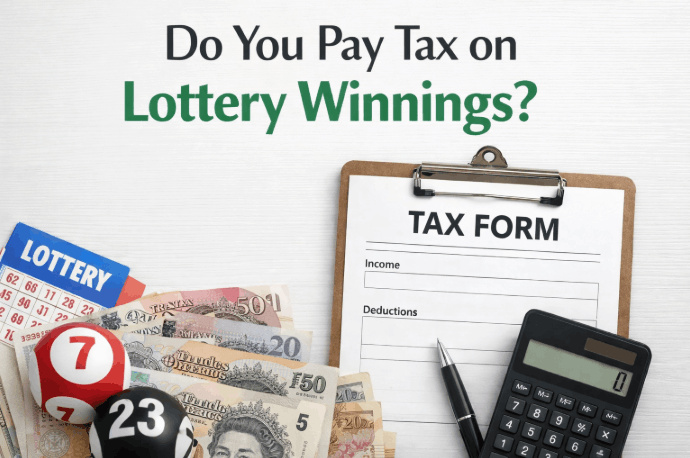
Lottery winnings are completely tax-free in the UK. HMRC does not classify lottery prizes as income or capital gains, meaning no Income Tax or Capital Gains Tax applies at the point of receipt.
This exemption has been in place since Gordon Brown abolished betting duty on individual gamblers in 2001 and applies to every prize from a UK-licensed lottery operator in the 2025/26 tax year.
Key Takeaways
- Lottery prizes from UK-licensed operators, including the National Lottery, EuroMillions, and scratch cards, are exempt from Income Tax and Capital Gains Tax at the point of receipt under current HMRC rules.
- Interest earned on deposited winnings is taxable income. Basic-rate taxpayers may earn up to £1,000 tax-free via the Personal Savings Allowance in 2025/26; additional-rate taxpayers receive no allowance at all.
- Unspent winnings form part of a deceased winner’s estate. The portion above the £325,000 nil-rate band is subject to Inheritance Tax at 40%.
Do You Pay Tax on Lottery Winnings in the UK?
No. Lottery winnings are completely tax-free in the UK. HMRC does not classify lottery prizes as income or capital gains, so no Income Tax or Capital Gains Tax applies at the point of receipt.
This exemption has been in place since Gordon Brown abolished betting duty on individual gamblers in 2001 and covers every prize paid by a UK-licensed lottery operator in the 2025/26 tax year.

Why Lottery Winnings Are Not Taxed in the UK?
HMRC classifies lottery prizes as gambling winnings, not earned income, and gambling winnings carry no Income Tax or Capital Gains Tax liability under UK tax law.
No deductions are applied at source. The full prize amount reaches the winner directly.
The current framework dates to 2001, when Gordon Brown abolished betting duty on individual gamblers and shifted the entire tax burden to licensed operators.
Under the Gambling Act 2005, every UK lottery operator pays a 12% Lottery Duty on ticket sales before a single prize is distributed.
The Office for Budget Responsibility forecast total betting and gaming duty receipts at £4 billion for 2025/26, confirming the model operates at scale. Because tax has already been collected from the operator, HMRC imposes no further levy on the winner.
The prize arrives untouched. Every tax consideration from that point forward depends entirely on what the winner does with the money.
Does the Same Rule Apply to EuroMillions, Scratch Cards, and Syndicates?
The UK tax exemption extends beyond the National Lottery to every licensed lottery product available to UK residents.
The Gambling Commission licenses all UK lottery operators under a unified regulatory framework, and the tax-free status applies to every prize paid by a licensed operator, regardless of size or product type.
The following lottery products are covered under the UK tax exemption:
- National Lottery products, including Lotto, Thunderball, and Set For Life: Fully exempt at point of receipt.
- EuroMillions prizes on UK-purchased tickets: Fully exempt at point of receipt.
- Scratch card prizes at any amount: Fully exempt at the point of receipt.
- Premium Bond prizes administered by NS&I: Fully exempt and not subject to HMRC assessment.
- Lottery syndicate winnings per member: Fully exempt, provided a written syndicate agreement was in place before the draw.
The Syndicate Agreement Risk
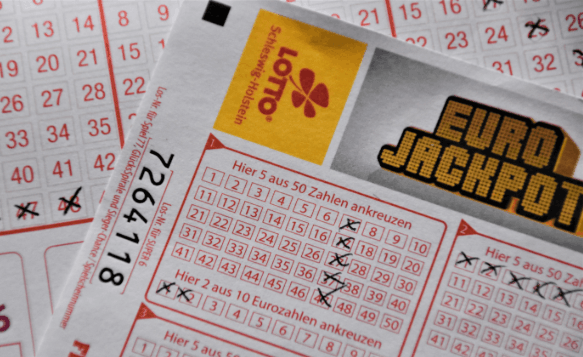
Where no written agreement exists before a draw, HMRC may treat the ticket buyer as the sole winner and classify every payment made to other members as a separate gift.
Each of those gifts then carries an Inheritance Tax exposure under the seven-year rule, potentially creating a significant and entirely avoidable liability across the whole group.
A properly drafted syndicate agreement, signed and dated before the ticket is purchased, establishes shared ownership from the outset.
It prevents any reclassification and costs nothing to create. For any syndicate distributing a significant prize, the written agreement is the single most protective document available.
Tax on Savings Interest and Investment Returns After a Win
The prize itself is tax-free, but every pound it generates from the moment it is deposited or invested is subject to standard UK tax rules. The tax-free status ends at the point of receipt. Returns generated by the prize are taxed in the normal way.
Savings interest is taxable above the Personal Savings Allowance. Basic-rate taxpayers receive a £1,000 allowance in 2025/26; higher-rate taxpayers receive £500; additional-rate taxpayers receive nothing.
A £2 million deposit earning 4% interest annually generates £80,000 in interest, placing most winners well inside the higher-rate band.
At that level of annual interest, a winner’s tax position closely mirrors the picture for those on a salary of 80k after tax.
Capital gains from asset sales are taxable above the £3,000 annual exempt amount in 2025/26, and dividend income is taxable above the £500 Dividend Allowance.
Tax Treatment of Lottery Winnings by Use (2025/26)
| How Winnings Are Used | Tax Applied | Rate or Threshold |
|---|---|---|
| Prize received (all UK lottery types) | No | Fully exempt |
| Savings account interest | Yes, above PSA | 20%, 40%, or 45% by income band |
| Stock and shares dividends | Yes, above £500 | 8.75%, 33.75%, or 39.35% |
| Capital gains from asset sales | Yes, above £3,000 | 10% to 24% by asset type |
| Rental income from property | Yes, after deductions | Taxed as standard income |
| ISA savings interest | No | Fully exempt up to £20,000 per year |
Placing winnings into an Individual Savings Account removes savings interest from the taxable income calculation entirely. The annual ISA allowance stands at £20,000 per person in 2025/26, and interest earned within an ISA is exempt from Income Tax with no threshold applied.
Inheritance Tax, Gifting, and the Seven-Year Rule
Lottery winnings do not trigger Inheritance Tax at the point of receipt. Unspent winnings form part of the estate, however, and gifts made from those winnings carry a seven-year liability window that every winner must understand before transferring significant sums to family members.
Estates above the £325,000 nil-rate band face a 40% Inheritance Tax charge on the excess. Gifts above the £3,000 annual exemption are classified by HMRC as Potentially Exempt Transfers.
They fall outside the estate only if the donor survives seven years from the date of the gift.
For winners managing large investment portfolios or regular income drawdown, the tax position is directly comparable to those earning around 50k after tax and structuring their income tax-efficiently.
Taper Relief: The Nil-Rate Band Sequencing Error
Taper relief is widely described as a straightforward rate reduction that kicks in after three years. That description is accurate as far as it goes, but it omits the detail that matters most to a lottery winner gifting above the nil-rate band.
Taper relief applies only to the portion of a gift that exceeds the £325,000 nil-rate band. Transfers that fall below that threshold receive no taper benefit at all.
A winner who gifts £500,000 in the first year after winning consumes the entire nil-rate band in a single transfer. Every subsequent gift attracts IHT exposure from the outset, at the rates set out in the schedule below.
Taper relief reduces the Inheritance Tax rate on Potentially Exempt Transfers made between 3 and 7 years before death, but only on the portion exceeding the £325,000 nil-rate band.
Winners gifting above that threshold should begin the seven-year clock as early as possible and maintain a detailed gifts record for HMRC.
Taper Relief Rate Schedule: Gifts Exceeding the Nil-Rate Band
- Gift made 0 to 3 years before death: 40% IHT rate, no relief applied
- Gift made 3 to 4 years before death: 32% IHT rate, 20% reduction applied
- Gift made 4 to 5 years before death: 24% IHT rate, 40% reduction applied
- Gift made 5 to 6 years before death: 16% IHT rate, 60% reduction applied
- Gift made 6 to 7 years before death: 8% IHT rate, 80% reduction applied
- Gift made 7 or more years before death: 0% IHT rate, fully exempt
HMRC also recognises a regular gifts from income exemption. Gifts made habitually from surplus income rather than capital can fall outside the estate with no seven-year clock required.
Winners using investment returns to fund regular family payments may qualify, provided income, expenditure, and gifting patterns are fully documented.
For anyone planning to distribute significant sums, taking specialist advice on nil-rate band sequencing and taper relief timing before making any transfer is the most consequential financial decision available at that stage.
Winners already managing income near the 38k after tax threshold will find that gifting decisions interact directly with their existing Income Tax position and require careful sequencing.
Does Winning the Lottery Affect Benefits?
Lottery prizes carry no tax charge, but the funds count as capital under DWP assessment rules for means-tested benefits.
A substantial win will remove eligibility for most means-tested support, and under the Social Security Administration Act 1992, reporting the change to the DWP is a legal requirement rather than a matter of choice.
The following means-tested benefits are directly affected when a claimant holds substantial capital:
- Universal Credit: capital above £16,000 disqualifies a claimant entirely; capital between £6,000 and £16,000 reduces the monthly payment on a sliding scale
- Housing Benefit: the same capital thresholds as Universal Credit apply in full
- Pension Credit: capital above £10,000 is assessed as generating notional income, reducing entitlement progressively
- Council Tax Reduction: assessed locally, but capital thresholds typically mirror Universal Credit rules
- Free school meals and other passported benefits: linked to Universal Credit entitlement and affected indirectly when Universal Credit ceases
Winners receiving any means-tested benefit must notify the Department for Work and Pensions promptly. Failure to report a change in financial circumstances is a criminal offence under the Social Security Administration Act 1992.
Winning the lottery does not itself trigger a tax liability, but it triggers a mandatory reporting obligation that carries a criminal penalty if ignored.
What Happens if You Win a Foreign Lottery?
The UK tax-free rule applies exclusively to prizes from UK-licensed lottery operators. Foreign lottery prizes are not automatically exempt and may be subject to taxation in the country where the lottery is based.
The United States withholds federal tax on Powerball and Mega Millions prizes at source. A UK resident winning a US lottery receives a reduced payout after American withholding tax is deducted.
HMRC may then assess the net sum received as foreign income, depending on how the prize is classified under the relevant double-taxation treaty between the UK and the source country.
Winners of foreign lottery prizes should declare the win via Self Assessment and seek specialist advice on treaty relief before assuming UK tax-free treatment extends to the full amount.
Where the lottery operator holds no UK licence, winners should not treat the HMRC exemption as applying by default. Confirming the tax position with a specialist adviser before spending or investing any portion of the prize is strongly advisable.
Immediate Steps to Protect a Large Win from Unnecessary Tax
No tax action is required at the point of receipt. The six steps below address the exposures that arise immediately after the prize is paid and are the ones most often overlooked.
- Confirm receipt in writing: request a formal letter from the lottery operator confirming the prize amount and payment date; this establishes the baseline estate value for Inheritance Tax purposes
- Open an ISA immediately: deposit up to £20,000 in the current tax year; interest earned within an Individual Savings Account is entirely exempt from Income Tax with no threshold applied
- Notify the DWP if receiving means-tested benefits: failure to report is a criminal offence under the Social Security Administration Act 1992; report before spending any portion of the prize
- Document every gift made from the date of the win: establish the date and value of each transfer; the seven-year clock runs from the date of the gift, not the date the prize was received
- Take professional tax advice before investing: rental income, dividends, and capital gains are all taxable above HMRC thresholds; structuring investments through tax-efficient vehicles from day one is substantially easier than restructuring an existing portfolio later
- Declare foreign lottery prizes via Self Assessment: if any portion of the prize originated from a non-UK-licensed operator, seek specialist advice on treaty relief before the Self Assessment deadline
All thresholds and rates above reflect HMRC guidance current to April 2025, cross-referenced against the Office for Budget Responsibility 2025/26 forecast.
Conclusion
The prize is the easy part. No tax applies at the point of receipt for any UK resident winning from a licensed operator, but the financial decisions made in the weeks and months that follow determine the real tax outcome.
The tax position changes the moment those funds are invested, gifted, or left to accumulate as part of an estate.
The Personal Savings Allowance, the nil-rate band, and the seven-year gifting clock each carry material consequences. Getting these right from the outset is what prevents a tax-free prize from generating an avoidable tax liability further down the line.
For UK residents winning from a licensed operator in 2025/26, the prize arrives in full. Tax on lottery winnings means tax on what the money earns, not on the win itself.
FAQ
Do you have to tell HMRC about lottery winnings?
No declaration to HMRC is required for prizes from UK-licensed lottery operators. If the prize subsequently generates taxable returns, such as savings interest or investment gains, those must be reported via Self Assessment in the usual way.
How much tax do you pay on a £1 million lottery win in the UK?
No tax is payable on the prize itself. A £1 million win from a UK-licensed lottery is received in full with no deductions applied. Tax liability arises only on income or gains generated by investing or depositing the prize money after it is received.
Are EuroMillions winnings taxable in the UK?
No. EuroMillions prizes on UK-purchased tickets are fully tax-free at the point of receipt. HMRC does not treat EuroMillions winnings as income, and no Income Tax or Capital Gains Tax applies regardless of the prize amount.
Do lottery syndicates pay tax on their winnings?
No tax applies to syndicate prize shares where a written agreement was in place before the draw. Without a written agreement, HMRC may reclassify payments to members as gifts, which can trigger Inheritance Tax exposure under the seven-year rule for each transfer.
What happens to lottery winnings when you die?
Unspent lottery winnings form part of the estate and are subject to Inheritance Tax at 40% on the portion above the £325,000 nil-rate band. Gifts made from winnings within seven years of death may also be drawn back into the estate as Potentially Exempt Transfers.
Disclaimer: This article is for informational purposes only and does not constitute formal legal or financial advice; please consult a qualified professional before making major financial decisions.