Best Card Reader for Small Business UK 2026: Fees, True Costs, Devices & Top 8 Providers Compared

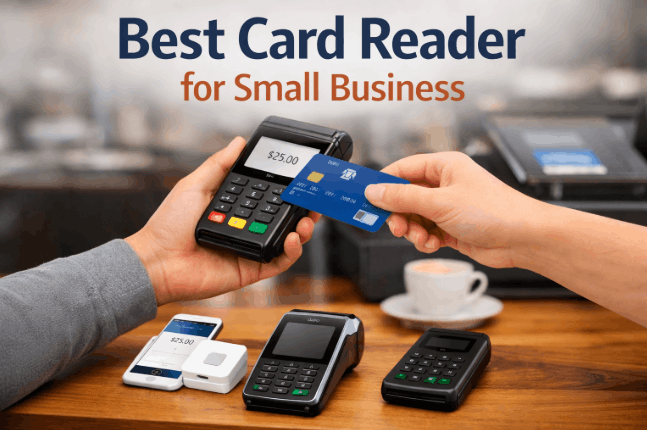
The best card reader for small business in the UK in 2026 is SumUp Air for sole traders and low-volume businesses, Square Reader for businesses needing free built-in POS software, and Dojo Go for high-volume retail and hospitality requiring guaranteed next-day payouts.
The right choice depends on monthly transaction volume, cash flow needs, and true cost of ownership, not the headline transaction rate alone.
Key Takeaways
- SumUp, Square, Zettle, Dojo, Tide, Mynt, Worldpay, and Barclaycard Smartpay are the leading card readers for UK small businesses in 2026, each suited to a distinct business model and transaction volume
- No monthly fee card readers charge a higher per-transaction rate in exchange for zero ongoing costs, but they are not always the cheapest option when the true cost of ownership is calculated
- The true cost of ownership covers four components: device price, transaction rate, payout speed, and chargeback exposure. Comparing transaction rates alone produces a misleading picture
- Under the Financial Services and Markets Act 2000, all payment service providers operating in the UK must be authorised or registered with the Financial Conduct Authority (FCA). Verify any provider at register.fca.org.uk before committing.
Not sure where to start? The five-step decision framework in the How to Choose section identifies the right card reader for your business based on monthly volume, mobility needs, and cash flow, without needing to read every section in sequence.
What Is a Card Reader and Its Purpose in Small Business in the UK?
A card reader is an electronic payment device that allows a business to accept debit and credit card payments, replacing or supplementing cash with a fast, secure, digitally recorded alternative.
In the UK, a card reader connects to a broader payment ecosystem: a processor, a card network such as Visa or Mastercard, and the customer’s issuing bank. Every tap or insert completes authorisation in under three seconds.
The commercial case is straightforward. According to UK Finance, cash accounted for just 12% of UK transactions in 2023, and that share continues to fall. A small business without card payment capability loses sales to competitors that offer it.
Declined payments, connectivity drops, and the occasional disputed transaction are a normal part of card acceptance, not system failures, and every provider on this list has built-in processes to handle them without disrupting daily trading.
Beyond payments, modern card readers integrate with stock management, sales reporting, and accounting software, automating record-keeping and supporting Making Tax Digital (MTD) compliance without additional administrative overhead.
Advantages and Disadvantages of Using a Card Reader for Small Business
| Advantages | Disadvantages |
|---|---|
| Accepts the dominant UK payment method, according to UK Finance, over 88% of UK transactions are now cashless | Transaction fees apply to every card payment, reducing net revenue per sale |
| Increases average transaction value, customers typically spend more by card than cash | Device cost is an upfront investment ranging from £19 to £59+ |
| Eliminates cash handling risks, till discrepancies, theft exposure, and bank deposit runs | Payout delays of 1–3 business days can create short-term cash flow pressure |
| Integrates with accounting and POS software, automates records and supports MTD compliance | Mobile Bluetooth readers require a smartphone and an internet connection to process payments |
| Pay-as-you-go models require no contract or monthly commitment | Chargeback disputes can result in funds being held or reversed with additional fees |
| Contactless and mobile wallet acceptance meets customer expectations and speeds up service | PCI DSS compliance remains the merchant's responsibility regardless of provider, as set out by the PCI Security Standards Council at pcisecuritystandards.org |
| Detailed sales reporting available through provider apps at no extra cost | Premium features, integrations, and multi-user access often require a paid subscription |
Best Card Readers for Small Businesses in the UK: Top 8 Providers Compared
SumUp Air is the strongest overall starting point for most UK small businesses, but seven other providers serve specific business models more effectively.
UK Small Business Card Reader Comparison (2026)
| Provider | Device Cost | Transaction Fee | Monthly Fee | Payout Speed | Best For |
|---|---|---|---|---|---|
| SumUp Air | ~£39 | 1.69% | £0 | 1–3 business days | Sole traders, low volume, mobile |
| Square Reader | ~£19 + VAT | 1.75% | £0 | Next business day | Cafés, retail needing free POS |
| Zettle by PayPal | ~£29 + VAT | 1.75% | £0 | 1–2 business days | PayPal-integrated businesses |
| Dojo Go | From ~£20/month | From 1.4% | Yes | Next business day (guaranteed) | High-volume retail and hospitality |
| Tide Card Reader | ~£49 | 1.5% | £0 | Same day (Tide account) | Tide banking customers |
| Mynt | ~£59 | Custom | Optional | Next business day | Growing SMEs needing scalability |
| Worldpay | Custom quote | Custom | Yes | 3–5 business days | Established SMEs, high volume |
| Barclaycard Smartpay | Custom quote | Custom | Yes | Next business day | Barclays banking customers |
Prices and rates correct as of May 2026. Verify current figures directly with each provider before committing.
SumUp Air
Best for Sole Traders and Low-Volume Businesses
SumUp Air is the most widely used pay-as-you-go card reader among UK sole traders, and the fee structure explains why. At 1.69% per transaction with no monthly fee, no contract, and a device cost of around £39, the total barrier to entry is the lowest of any serious provider in the UK market.
The device pairs with the SumUp app via Bluetooth and accepts contactless, chip and PIN, and mobile wallet payments. Setup takes under 15 minutes from unboxing to first transaction, a meaningful advantage for a business owner without technical resource.
SumUp Air suits market traders, mobile beauticians, personal trainers, and any business taking card payments intermittently rather than continuously. Its limitation is payout speed: settlements arrive in 1–3 business days, which matters when cash flow is tight.
Businesses processing consistently above £8,000 a month should model whether SumUp’s transaction rate remains competitive against providers offering lower rates at higher volumes.
Square Reader
Best for Businesses Wanting Free Built-In POS Software
Square Reader’s strongest argument is not the device, it is everything behind it.
At around £19 plus VAT, the reader is the cheapest entry point in the market, and it connects to Square’s free point-of-sale software, which includes inventory management, sales reporting, and customer data tools at no additional cost.
For a small café or independent retailer that would otherwise pay separately for POS software, Square’s bundled approach delivers genuine value that the headline 1.75% transaction fee does not immediately reveal.
The free software tier handles the operational needs of most small businesses without an upgrade.
Square’s limitation is payout speed on the free plan, next business day settlements are available, but instant transfers carry an additional fee.
Businesses that need guaranteed same-day access to funds should factor this into their comparison.
Square also holds strong appeal for food and beverage businesses through its free Square for Restaurants tier.
Zettle by PayPal
Best for PayPal-Integrated Businesses
Zettle by PayPal is the natural choice for any UK small business that already processes payments through PayPal, online, invoicing, or otherwise.
The integration means card payments, online payments, and PayPal transactions consolidate into a single dashboard, removing the reconciliation friction that comes with running separate payment systems.
The device costs around £29 plus VAT with a 1.75% transaction fee and no monthly contract. Payout speed runs at 1–2 business days into a linked PayPal or business bank account.
The Zettle POS app is free and covers basic inventory and sales reporting. Zettle’s weakness is that its ecosystem advantage only delivers value if the business already uses PayPal meaningfully.
For businesses with no existing PayPal relationship, SumUp or Square offer comparable pricing with stronger native software.
Dojo Go
Best for High-Volume Retail and Hospitality
Dojo Go operates on a different commercial model from the pay-as-you-go providers above, and that distinction matters.
Dojo charges a monthly subscription (from around £20/month) rather than zero monthly fees, but delivers two advantages that justify the cost at higher transaction volumes: a lower transaction rate starting from 1.4%, and guaranteed next-business-day payouts, a contractual commitment, not a best-efforts timeline.
For a hospitality business taking £20,000+ in card payments monthly, the combination of a lower transaction rate and reliable payout timing creates meaningful financial advantage over a 1.75% pay-as-you-go provider.
The Dojo Go terminal is a 4G-enabled standalone device, it does not require a smartphone or tablet, which improves reliability on a busy shop floor. Dojo is not the right fit for early-stage or low-volume businesses.
The monthly fee creates a fixed cost that only becomes efficient above a certain transaction threshold. Businesses processing under £5,000 a month should model the numbers carefully before committing.
Tide Card Reader
Best for Existing Tide Business Banking Customers
Tide Card Reader is a strong option for the specific segment of UK small businesses already banking with Tide.
At a 1.5% transaction fee and around £49 device cost, its pricing sits competitively between the pay-as-you-go tier and subscription providers, but its real advantage is settlement speed.
Payments from the Tide card reader settle into a Tide business account on the same day, which is the fastest payout option available without a premium fee in the UK market.
For a sole trader or small limited company already using Tide for day-to-day banking, this same-day settlement eliminates the cash flow gap that affects every other provider on this list.
Outside of the Tide ecosystem, the advantage disappears, and settlements into external bank accounts follow a standard 1–3 day timeline, removing the primary differentiator.
Mynt
Best for Growing SMEs Needing Scalability
Mynt is a UK-based payment provider that occupies a useful middle ground between the entry-level pay-as-you-go readers and full merchant account solutions.
The Mynt terminal costs around £59 and offers custom transaction rates negotiated based on monthly volume, making it increasingly competitive as a business scales past the point where fixed-percentage rates become expensive.
For context, custom rates are typically negotiated below the standard 1.5%–1.75% pay-as-you-go range for businesses processing above £10,000/month, making Mynt a meaningful step down in transaction cost from SumUp or Square at higher volumes without the full contractual commitment of a Worldpay or Barclaycard arrangement.
Mynt’s flexibility is its defining characteristic. Businesses can configure the device with optional monthly software plans, integrate with accounting platforms, and access multi-user management, features that matter more to an SME with a small team than to a sole trader taking occasional payments.
Mynt suits businesses that have outgrown SumUp or Square but are not yet ready for the complexity of a full merchant account.
Worldpay
Best for Established SMEs Processing High Monthly Volumes
Worldpay is the UK’s largest payment processor by volume. Custom pricing, formal contracts, and dedicated support make it competitive for established businesses processing £30,000+ monthly, where negotiated rate savings on volume outweigh the administrative overhead and 3–5 day payout timeline.
It is not suited to early-stage or low-volume businesses.
Barclaycard Smartpay
Best for Barclays Business Banking Customers
Barclaycard Smartpay delivers bank-backed credibility and consolidated banking and payments reporting for businesses already holding a Barclays business account.
Next-business-day payouts for Barclays account holders are competitive with the market leaders. Pricing requires a direct conversation with Barclays, headline rates are not publicly listed.
Before engaging any provider, verifying their registered business credentials, including a VAT number check by company name, is a straightforward due diligence step worth completing before sharing business banking details.
What Is the True Cost of a Card Reader for Your Small Business?
The transaction rate is not the total cost of a card reader, and for most small businesses, it is not the most consequential number. The true cost of ownership covers four components:
- Device cost: A one-off purchase between £19 and £59 for most providers, or a monthly hardware rental for providers like Dojo.
- Transaction fee: The percentage charged on every card payment. This is the figure most businesses compare, but in isolation, it is incomplete.
- Payout speed: The hidden cash flow cost. A provider settling in 3 business days versus next business day means a growing business is permanently floating 3 days of revenue. At £10,000/month in card sales, that is roughly £1,000 of working capital tied up at any given time.
- Chargeback and dispute fees: Most pay-as-you-go providers charge a fee per chargeback (typically £10–£25). Businesses in higher-dispute sectors (hospitality, events, online-adjacent retail) should factor this into volume projections.
For a UK small business processing £5,000 per month in card payments, the difference between a 1.69% and 1.75% transaction rate is £3 per month.
The difference between next-day and 3-day payouts is approximately £500 in working capital permanently tied up. At this volume, payout speed has a materially larger financial impact than a 0.06% rate difference.
Key Fact: At £5,000/month card volume, a 0.06% rate difference saves £3.60/month, but a 2-day payout delay ties up an estimated £333 in working capital on a permanent rolling basis.
True Cost Comparison: SumUp Air vs Dojo Go at £5,000/month (Annual)
| Cost Component | SumUp Air | Dojo Go |
|---|---|---|
| Device cost (amortised over 12 months) | ~£3.25/month | ~£20/month (subscription) |
| Transaction fee on £5,000 | £84.50/month (1.69%) | £70/month (1.4%) |
| Instant transfer fee (if used) | Additional 1% | Not required, next-day guaranteed |
| Estimated annual total | ~£1,053 | ~£1,080 |
| Best at this volume? | SumUp cheaper at £5,000/month | Dojo cost-effective above ~£8,000/month |
At £5,000/month, SumUp Air costs approximately £27 less per year than Dojo Go, but Dojo’s guaranteed next-day payout removes the working capital float entirely. The right choice depends on whether cash flow certainty or the lowest annual cost is the bigger priority for the business.
How to Save Money While Using a Card Reader for Small Business?
Reducing card payment costs does not always require switching providers, it requires understanding where costs accumulate.
- Match volume to pricing model. Pay-as-you-go providers are cost-effective below £8,000–£10,000/month. Above that threshold, model a subscription provider against your current rate, the crossover typically occurs within 6–12 months of consistent growth.
- Avoid instant transfer fees. Instant payout options typically add 0.5%–1% on top of the standard transaction rate. Operating on next-business-day settlement eliminates this cost for most businesses.
- Negotiate at volume. Worldpay, Barclaycard, Mynt, and Dojo all offer custom pricing above defined monthly thresholds. Many small business owners never ask, and pay fixed rates they have outgrown.
- Audit software subscriptions annually. Several providers charge monthly fees for reporting and integrations available free through Square or Zettle. Reviewing active subscriptions each year surfaces costs that no longer deliver proportionate value.
- Confirm PCI DSS compliance management in writing. Non-compliance fines can significantly exceed annual transaction fee savings. Confirming the provider manages this on the merchant’s behalf removes a cost risk that is easy to overlook at onboarding.
Card Readers for Small Business: Myth vs Reality
Misconceptions about card reader costs and requirements are widespread in UK search behaviour, and acting on them leads to poor purchasing decisions.
| Myth | Reality |
|---|---|
| Free card readers are always the cheapest option | Free devices carry higher per-transaction fees. Over 12 months, a paid device with a lower rate is frequently cheaper in total cost of ownership terms. |
| All card readers charge a monthly fee | SumUp, Square, Zettle, and Tide operate on pay-as-you-go with zero monthly fees. The only cost is a percentage per transaction. |
| You need a merchant account to accept card payments | Pay-as-you-go providers, including SumUp, Square, and Zettle act as payment facilitators, no separate merchant account is required. |
| Contactless payments are less secure than chip and PIN | Both methods comply with PCI DSS standards and carry identical fraud liability protections for UK merchants under Visa and Mastercard rules. |
| PCI DSS compliance only applies to large businesses | Under PCI Security Standards Council requirements, every UK business accepting card payments must maintain PCI DSS compliance regardless of size. Most pay-as-you-go providers manage this on the merchant's behalf, confirm this in writing. |
| The lowest transaction rate always saves the most money | The true cost of ownership includes payout speed, chargeback fees, and device cost. The lowest advertised rate does not always produce the lowest annual cost. |
| Switching providers is complicated and costly | Pay-as-you-go providers carry no exit fees or lock-in. Switching requires updating settlement bank details, typically a 30-minute task. |
| All UK card readers accept American Express | Zettle and Tide do not accept Amex as standard. Businesses in premium sectors should verify Amex acceptance before selecting a provider. |
Which Card Reader Has No Monthly Fee?
SumUp Air, Square Reader, Zettle by PayPal, and Tide Card Reader all operate on a pay-as-you-go model with no monthly fee, no minimum commitment, and no exit penalty. The only ongoing cost is a percentage of each transaction processed.
The trade-off is consistent: zero monthly fee providers charge 1.69%–1.75% per transaction, versus subscription providers like Dojo starting from 1.4%.
Below £8,000–£10,000/month in card sales, pay-as-you-go is almost always more cost-effective. Above that threshold, the lower transaction rate begins to offset the monthly subscription fee.
Under the Financial Services and Markets Act 2000, all payment service providers in the UK must be authorised or registered on the FCA Financial Services Register, confirmed at register.fca.org.uk.
SumUp vs Square: Which Is Better for a Small Business in the UK?
For most UK small businesses, SumUp wins on cost, but Square wins for any business that needs free POS software.
SumUp’s 1.69% rate undercuts Square’s 1.75%. The device costs more (£39 vs £19 + VAT), but the rate difference offsets this for businesses processing above £3,000/month.
Payout speed is comparable, both offer next-business-day settlement on standard plans. Square wins when the business needs more than a payment device.
Free inventory management, sales reporting, staff tools, and sector-specific POS tiers for restaurants and retail deliver operational value that SumUp’s basic app does not match.
SumUp is better for UK sole traders and mobile businesses prioritising the lowest transaction rate with no monthly commitment. Square is better for small businesses requiring free built-in POS software alongside card payment processing.
The 0.06% rate difference is marginal, the software ecosystem is the decisive factor in this comparison.
The decision reduces to one question: Does the business need advanced POS software, or the lowest available transaction rate?
Which Card Reader Works Without Internet or WiFi?
SumUp Air and Square Reader both offer offline payment modes, but both queue transactions locally and process them only when connectivity is restored.
SumUp accepts the offline risk on the merchant’s behalf up to a defined transaction limit. Square requires reconnection within 24 hours to complete processing. Both providers publish their current offline transaction limits in their terms of service.
Confirm the applicable limit directly with your chosen provider before trading in environments where connectivity cannot be guaranteed, as limits are subject to change and vary by account type.
Neither guarantees real-time authorisation without connectivity.
Dojo Go and Barclaycard Smartpay operate on 4G SIM connectivity rather than WiFi or Bluetooth, making them significantly more reliable for market traders, festival vendors, and rural businesses where internet connectivity is inconsistent.
Card Reader Accessibility: Does It Accept All Card Types?
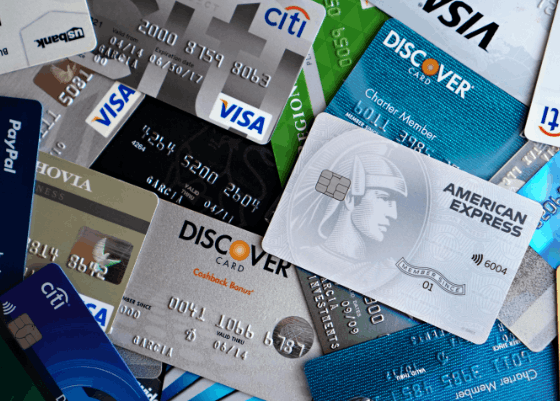
Visa and Mastercard are accepted as standard by every provider on this list, but American Express acceptance varies significantly.
| Provider | Amex Accepted? |
|---|---|
| SumUp Air | Yes, standard |
| Square Reader | Yes, standard |
| Zettle by PayPal | No, not standard |
| Dojo Go | Confirm at contract |
| Tide Card Reader | No, not standard |
| Mynt | Available on request |
| Worldpay | Yes, custom rate may apply |
| Barclaycard Smartpay | Yes, confirm terms |
For businesses in professional services, premium retail, or corporate hospitality, where Amex usage is disproportionately common, verifying acceptance before selecting a provider is an essential step.
How to Choose the Best Card Reader for Small Business
Monthly transaction volume is the single most important factor, it determines whether pay-as-you-go or subscription delivers better value.
Factors to Consider Before Choosing
- Transaction volume and pricing model fit: Below £5,000/month, pay-as-you-go. Above £10,000/month, model subscription providers.
- Mobility and operating environment: Mobile reader for businesses that move; standalone terminal for fixed-location reliability.
- Payout speed and cash flow: If payroll or supplier payments follow within 24–48 hours of card sales, guaranteed next-day settlement is a necessity.
- Software and integration requirements: A sole trader needs a simple app; a team-based business needs POS and accounting integration.
- Amex and card type acceptance: Verify which card networks the shortlisted provider supports.
- Contract terms: Pay-as-you-go providers carry no lock-in; subscription and merchant account providers operate on formal contracts.
- FCA authorisation: Verify at register.fca.org.uk before committing.
Five-Step Decision Framework
- Calculate monthly card payment volume: This single figure sets the boundary for every other decision.
- Choose your device category: Mobile Bluetooth, smart standalone terminal, or merchant account machine.
- Calculate true cost of ownership: Device cost + transaction rate + payout speed cash flow impact + chargeback exposure.
- Match payout speed to cash flow requirements: Identify the settlement timeline the business can sustain without pressure.
- Verify FCA authorisation and confirm PCI DSS compliance management: Search the provider on the FCA register and get compliance confirmation in writing.
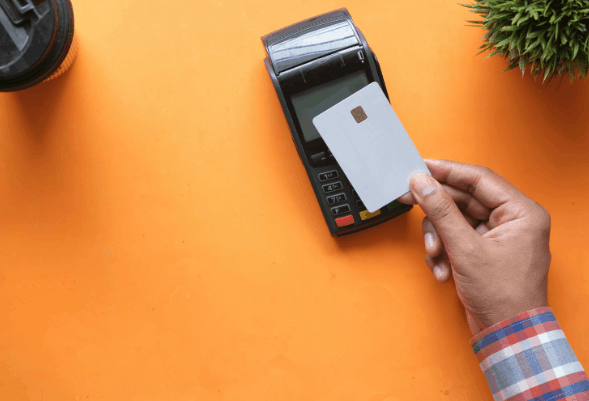
Dos and Don’ts While Using a Card Reader for Small Business
| Dos | Don'ts |
|---|---|
| Verify FCA authorisation of any provider before sharing business banking details | Select a provider based solely on advertised transaction rate without calculating true cost of ownership |
| Confirm in writing that your provider manages PCI DSS compliance on your behalf | Process payments on a physically damaged or tampered device |
| Match payout settlement timelines to your actual cash flow cycle before committing | Ignore chargeback notifications, unresponded disputes are automatically decided in the customer's favour |
| Keep the card reader app and firmware updated, providers regularly release security patches | Store card numbers or CVV codes manually, under PCI DSS rules set by the PCI Security Standards Council, this creates direct compliance liability for the business |
| Issue digital or printed receipts for every transaction to support dispute resolution | Allow customers to enter PINs on a device that is not a certified PIN Entry Device (PED) |
| Reconcile card terminal reports against bank settlements daily | Share card reader login credentials across multiple staff, individual accounts provide an essential audit trail |
| Review transaction fee totals monthly and model alternative providers annually as volume grows | Assume your card reader accepts all card types without verifying Amex and mobile wallet support |
Best Card Reader for Small Business UK: Quick Reference Guide
Three device categories serve the UK market:
- Mobile Bluetooth readers: Compact devices pairing with a smartphone app (SumUp Air, Square Reader, Zettle by PayPal). Low upfront cost, no contract, portable. Best for sole traders, market traders, and mobile service businesses with lower monthly volumes.
- Smart standalone terminals: All-in-one devices with built-in screens, WiFi or SIM connectivity, and independent software (Dojo Go, Mynt Terminal). Higher upfront cost, faster payouts, and more reliable in fixed locations. Best for cafés, retail shops, and hospitality businesses.
- Traditional merchant account machines: Bank-issued devices with negotiated rates and contracts. Best for established businesses processing consistently high volumes where custom pricing delivers genuine savings.
| Provider | Best For | Monthly Fee | Transaction Rate |
|---|---|---|---|
| SumUp Air | Sole traders, low volume, mobile businesses | £0 | 1.69% |
| Square Reader | Businesses needing free POS software | £0 | 1.75% |
| Zettle by PayPal | PayPal-integrated businesses | £0 | 1.75% |
| Dojo Go | High-volume retail and hospitality | From ~£20 | From 1.4% |
| Tide Card Reader | Tide business banking customers | £0 | 1.5% |
| Mynt | Growing SMEs needing scalability | Optional | Custom |
| Worldpay | Established SMEs at high monthly volumes | Yes | Custom |
| Barclaycard Smartpay | Barclays business banking customers | Yes | Custom |
Conclusion
Choosing the best card reader for small business is not about finding the lowest transaction rate, it is about matching device type, fee structure, and payout speed to how the business actually operates.
SumUp suits lower-volume sole traders; Square suits businesses needing free software; Dojo suits high-volume operations where payout timing is critical; Worldpay and Barclaycard suit established SMEs with volume to justify negotiated terms.
A persistent misconception in UK search results is that free card readers are always the cheapest option, the true cost of ownership framework consistently shows otherwise. Verify current rates directly with each provider and confirm FCA authorisation at register.fca.org.uk before committing.
The best card reader for small business means the right device for the right business model, for UK small business owners in 2026.
Information verified May 2026. Transaction fees, device prices, and payout timelines are subject to change. Always confirm current figures directly with the relevant provider.
FAQ
What is the cheapest way to take card payments in the UK?
For businesses processing under £5,000/month, SumUp Air at 1.69% with no monthly fee typically produces the lowest total annual cost. Above £10,000/month, a subscription provider’s lower transaction rate becomes more cost-effective once offset across total volume.
Is there a free app to take card payments for small businesses?
Yes, Square and Zettle both offer free POS apps alongside their card readers. Square’s free tier includes inventory management, sales reporting, and customer tools.
The 1.75% transaction fee applies per payment; the app itself carries no monthly charge.
Do I need a merchant account to use a card reader?
No. SumUp, Square, and Zettle operate as payment facilitators, the underlying merchant account sits with the provider. You can begin accepting card payments immediately without applying for or managing a separate merchant account.
What is PCI DSS and does it affect my small business?
Under PCI Security Standards Council requirements, PCI DSS applies to every UK business accepting card payments regardless of size.
Most pay-as-you-go providers manage compliance on the merchant’s behalf, confirming this in writing before trading remains the merchant’s responsibility. Non-compliance can result in fines and suspension of card processing rights.
Can I use a card reader without a contract?
Yes. SumUp, Square, Zettle, and Tide carry no fixed-term contract, no minimum commitment, and no exit fee. Dojo, Worldpay, and Barclaycard operate on formal contracts, review termination terms carefully before signing.
How quickly will money reach my account after a card payment?
Tide settles same-day into a Tide business account. Square and Dojo offer next-business-day settlement as standard. SumUp and Zettle typically settle in 1–2 business days. Worldpay settles in 3–5 business days. Instant transfer options exist across several providers but carry an additional fee.
What is the best card reader for a market trader or mobile business?
SumUp Air is the most practical choice for UK market traders and mobile businesses, compact, Bluetooth-connected, with all-day battery performance and pay-as-you-go pricing.
For low-connectivity environments such as outdoor markets or rural locations, Dojo Go’s 4G SIM connectivity offers greater reliability at a higher monthly cost.
What are the disadvantages of SumUp?
SumUp’s primary limitations are payout speed (1–3 business days) and software depth. The app handles straightforward payments reliably but lacks Square’s advanced inventory management, staff tools, and sector-specific POS features.
For businesses with complex operations or tight cash flow cycles requiring daily settlement, these constraints become relevant at higher trading volumes.
This article is for informational purposes only and does not constitute financial, legal, or commercial advice. Always conduct independent research and consult a qualified professional before making business payment decisions.