Best Small Business Accounting Software UK: MTD-Ready Picks for Every Budget in 2026

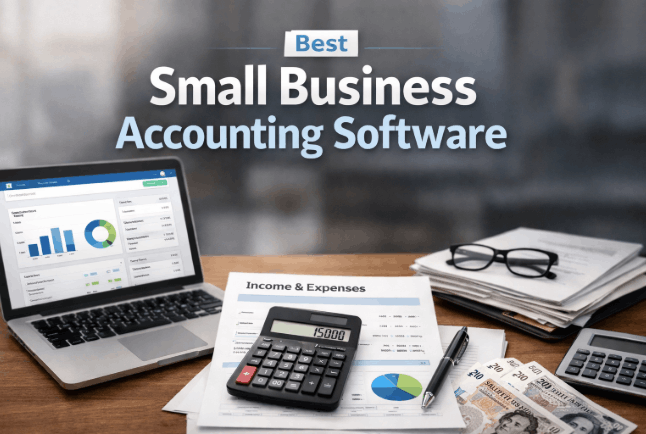
Small business accounting software is a cloud-based tool that enables UK businesses to manage invoicing, expenses, bank reconciliation, and VAT returns while meeting HMRC’s Making Tax Digital compliance requirements.
The best small business accounting software for UK businesses in 2026 is QuickBooks Online, Xero, or Sage Business Cloud Accounting, each is HMRC-recognised, Making Tax Digital compliant, and suited to different business sizes and structures. FreeAgent is the leading choice for NatWest Group customers, available free with a qualifying business account.
With Making Tax Digital for Income Tax arriving in April 2026, the software decision has moved beyond convenience, it is now a compliance requirement for thousands of UK businesses. Choosing the right platform from the outset avoids the cost and disruption of switching later.
Key Takeaways
- MTD for Income Tax Self Assessment becomes mandatory in April 2026 for sole traders and landlords with qualifying income above £50,000, rising to those above £30,000 from April 2027.
- Xero holds the largest certified accountant partner network in the UK, making it the preferred choice when your accountant already uses the platform for seamless year-end collaboration.
- FreeAgent is available free of charge to NatWest, RBS, Ulster Bank, and Mettle business account holders, making it the most cost-effective MTD-compliant option for eligible UK sole traders.
- HMRC maintains the GOV.UK MTD-compatible software list as the authoritative registry of recognised platforms, checking this list before purchasing any accounting software is the single most important verification step.
What Is Small Business Accounting Software?
Small business accounting software is a cloud-based platform that replaces manual record-keeping with automated financial management, covering invoicing, bank reconciliation, expense tracking, VAT returns, and financial reporting from a single dashboard.
Platforms such as Xero and QuickBooks Online connect directly to business bank accounts through Open Banking, automating transaction categorisation and real-time reconciliation.
Making Tax Digital has made digital record-keeping a legal requirement for VAT-registered businesses since April 2022, and for qualifying income earners from April 2026, making HMRC-recognised software a statutory necessity.
The right software keeps a UK business organised, compliant, and on top of every tax obligation throughout the year.

Why UK Small Businesses Need Accounting Software in 2026?
UK small businesses need accounting software in 2026 primarily because Making Tax Digital has moved from optional to legally mandatory, and the deadline for millions of businesses is now in force.
Making Tax Digital for Income Tax Self Assessment requires self-employed individuals and landlords to submit quarterly updates to HMRC using compatible software. Phase 1 applies from April 2026 for those earning above £50,000; Phase 2 extends to those above £30,000 from April 2027.
If your business is VAT-registered or approaching the registration threshold, confirming your status with a VAT number check by company name is a practical first step before selecting software, as MTD for VAT has been mandatory since April 2022.
Beyond compliance, cloud accounting software helps reduce accountant fees, gives a clearer picture of cash flow, and produces financial reports that hold up when applying for business finance.
For thousands of UK small businesses, accounting software in 2026 is a legal requirement, not simply a tool for saving time.
What to Look for in UK Small Business Accounting Software?
The first filter for any UK accounting software decision is HMRC recognition, if a platform does not appear on the GOV.UK MTD-compatible software list, it cannot satisfy Making Tax Digital obligations regardless of its features or pricing.
Once HMRC recognition is confirmed, evaluate these four criteria:
- HMRC recognition and MTD compatibility: Confirm the platform supports your specific obligation: MTD for VAT if your business is VAT-registered, or MTD ITSA if qualifying income exceeds the relevant threshold. Always verify against the GOV.UK MTD-compatible software list before purchasing.
- Open Banking bank feeds: Platforms operating under Financial Conduct Authority (FCA)-governed Open Banking frameworks automate transaction import and daily reconciliation, saving the most time in routine use.
- Accountant compatibility: Choosing software your accountant already uses eliminates year-end data transfer friction and can meaningfully reduce billable hours at filing time.
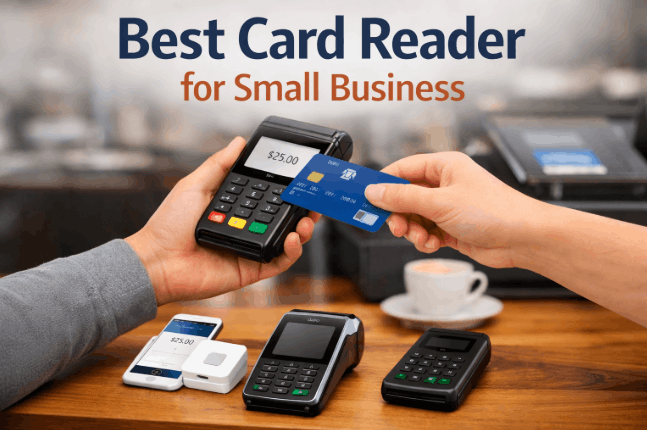
- Integrations and payment tools: If your business accepts card payments, accounting software with payment integration removes duplicate entry. The best card reader for small business connect directly with major platforms including Xero and QuickBooks
Pricing should be assessed only after these four criteria are satisfied. HMRC recognition is the non-negotiable starting point, every other feature decision is secondary to compliance.

The 9 Best Small Business Accounting Software in the UK 2026
The nine platforms reviewed below cover the full range of UK business needs, from sole traders on a tight budget to limited companies requiring full payroll and MTD compliance.
All except Wave are HMRC-recognised and natively MTD-compliant. QuickBooks and Xero lead on integrations and accountant compatibility; Sage leads on built-in payroll; FreeAgent is free for NatWest Group banking customers.
1. QuickBooks Online
QuickBooks Online is the most widely adopted accounting platform among UK sole traders and small businesses. It connects directly to business bank accounts to automate bank reconciliation, categorise transactions, and generate VAT return submissions without manual input.
The mileage tracking and Self Assessment tools make it particularly strong for sole traders filing their own returns, while the payroll add-on and 750+ third-party integrations give it the depth to scale as a business grows.
QuickBooks is HMRC-recognised and fully compatible with both MTD VAT and MTD ITSA, covering all current and upcoming Making Tax Digital obligations.
- Best for: Sole traders, freelancers, and VAT-registered small businesses
- UK pricing (2026): Simple Start from £14/month | Essentials from £28/month | Plus from £42/month
The self-employed tier’s automated income categorisation and mileage logging make it the most practical entry-level option for sole traders managing Self Assessment independently.
2. Xero
Xero is the preferred platform for UK businesses with active accountant relationships, built around a UK-first partnership strategy that produced the largest certified accountant network in the country.
It offers over 1,000 third-party app integrations, Hubdoc receipt capture, and automated bank reconciliation. Multi-currency support is available from the Business plan upwards, and purchase order management is included across all paid tiers.
Xero is HMRC-recognised and fully compatible with MTD VAT and MTD ITSA, making it suitable for businesses preparing for both current and upcoming compliance phases.
- Best for: Growing small businesses, accountant-collaborative workflows, businesses with multiple software integrations
- UK pricing (2026): Starter from £16/month | Standard from £33/month | Premium from £47/month
Businesses whose accountants already use Xero benefit from seamless data sharing and a reduced risk of duplicate entry during year-end reconciliation.
3. Sage Business Cloud Accounting
Sage Business Cloud Accounting is the only major UK platform to include payroll at its standard tier, removing the need for a separate payroll subscription.
AI-powered automation via Sage Copilot handles routine transaction categorisation, while built-in bank reconciliation, VAT return submissions, and receipt capture cover all core accounting functions. Multi-currency support is available on the Sage Accounting Plus plan.
As a UK-founded business since 1981, Sage’s tools are built specifically for the domestic tax system. It is HMRC-recognised and fully compatible with MTD VAT and MTD ITSA.
- Best for: UK-first businesses, businesses with employees, retail, manufacturing, and hospitality sectors
- UK pricing (2026): Sage Accounting Start from £14/month | Sage Accounting from £30/month
Sage’s built-in payroll at the standard tier delivers genuine value for small businesses that would otherwise pay separately for a dedicated payroll add-on.

4. FreeAgent
FreeAgent is a full-featured UK accounting platform built specifically for freelancers, contractors, and sole traders, and it is available free of charge to qualifying NatWest, RBS, Ulster Bank, and Mettle business account holders.
It covers time tracking, project management, invoicing, self-assessment filing, VAT returns, and expense management from a single interface. Automated bank feeds handle transaction import and reconciliation through Open Banking, removing manual entry entirely.
FreeAgent is HMRC-recognised and fully compatible with both MTD VAT and MTD ITSA.
- Best for: Freelancers, contractors, and sole traders, particularly NatWest Group banking customers
- UK pricing (2026): £19/month standard | Free with qualifying NatWest, RBS, Ulster Bank, or Mettle business account
FreeAgent covers every core function a sole trader or freelancer requires, including free accounting software with bank feeds, at no cost for millions of existing NatWest Group customers.
5. Zoho Books
Zoho Books is one of the few platforms to offer a genuinely free MTD VAT-compliant tier in the UK market, making it the standout option for micro-businesses with turnover below £35,000.
Automated invoicing, bank feeds, VAT and Self Assessment returns, inventory management, and a client-facing portal are available on paid plans. Multi-currency support makes it practical for businesses with international clients.
MTD VAT is supported on the free plan; MTD ITSA support is included on paid plans. Zoho Books is HMRC-recognised.
- Best for: Micro-businesses, sole traders with simple finances, and businesses with international clients
- UK pricing (2026): Free plan (turnover under £35,000) | Standard from ~£12/month | Professional from ~£24/month
Zoho Books’ free tier supports MTD VAT filing, a combination of zero cost and full HMRC compliance that no other major platform in this comparison matches at entry level.
6. FreshBooks
FreshBooks is designed for service-based businesses that bill by time, with client portal and time-tracking tools that stand out clearly in this comparison. Invoicing, expense tracking, team collaboration, and VAT return submissions are included across standard plans.
The client self-service portal allows clients to view and settle invoices directly, which accelerates payment collection for businesses managing multiple ongoing client relationships. FreshBooks is HMRC-recognised for VAT submissions.
- Best for: Service businesses, consultants, agencies, and freelancers billing hourly
- UK pricing (2026): Lite from ~£15/month | Plus from ~£25/month | Premium from ~£35/month
FreshBooks’ combination of time tracking and a client-facing payment portal makes it the strongest option in this comparison for service businesses billing by the hour.

7. KashFlow
KashFlow is a UK-built and UK-hosted accounting platform designed from the ground up for the domestic tax system. Invoicing, VAT returns, bank feeds, purchase orders, and financial reporting are all included, with a payroll add-on available at the Business + Payroll tier.
There are no US-market legacy features adding unnecessary complexity, every tool reflects the practical requirements of a UK small business. KashFlow is HMRC-recognised.
- Best for: UK small businesses wanting a simple domestic alternative; sole traders; partnerships
- UK pricing (2026): Starter from £10/month | Business from £16/month | Business + Payroll from £20/month
KashFlow’s £10/month entry price makes it the most affordable paid HMRC-recognised platform in this comparison for businesses that do not qualify for a free tier.
8. Clear Books
Clear Books is a UK-native platform with confirmed MTD ITSA support at its standard tier, one of the few platforms outside the top three to confirm full readiness for the April 2026 Income Tax rollout.
It covers invoicing, bank feeds, MTD for VAT and Income Tax, purchase orders, and payroll integration across standard plans, with multi-currency available on premium. Clear Books is HMRC-recognised and ready for both MTD VAT and MTD ITSA.
- Best for: Limited companies, charities, partnerships, and businesses prioritising early MTD ITSA adoption
- UK pricing (2026): Micro from £9/month | Business from £18/month
Clear Books’ confirmed MTD ITSA readiness from £9/month makes it the most cost-effective option for businesses requiring full Income Tax compliance at launch.
9. Wave
Wave is a permanently free accounting platform suited to micro-businesses with very simple finances, but UK users must confirm that Wave is not natively MTD-compliant before relying on it for HMRC submissions.
Core features include invoicing, expense tracking, and basic financial reporting at no cost, with payroll and payment processing available as paid add-ons. For any UK business with VAT or MTD Income Tax obligations, bridging software is required alongside Wave.
- Best for: Micro-businesses and sole traders with simple finances and no current MTD obligations
- UK pricing (2026): Free (core features) | Paid add-ons for payroll and payment processing
Wave is a viable zero-cost option for micro-businesses whose MTD obligations do not yet apply, but any business with active HMRC reporting requirements must verify its compliance position before choosing it as a primary platform.
UK Small Business Accounting Software Comparison 2026
| Platform | Best For | Starting Price (£/month) | MTD VAT | MTD ITSA | Payroll Included | Free Tier |
|---|---|---|---|---|---|---|
| QuickBooks Online | Sole traders, VAT-registered SMEs | £14 | Yes | Yes | Add-on | No |
| Xero | Accountant-collaborative workflows | £16 | Yes | Yes | Add-on | No |
| Sage Business Cloud | Businesses with employees | £14 | Yes | Yes | Yes, Included | No |
| FreeAgent | Freelancers, NatWest Group customers | £19 (or free) | Yes | Yes | No | Yes, Via NatWest Group |
| Zoho Books | Micro-businesses, under £35k turnover | Free / ~£12 | Yes | Yes, Paid plans | No | Yes |
| FreshBooks | Service businesses, hourly billing | ~£15 | Yes | Verify with provider | No | No |
| KashFlow | Simple UK-first requirements | £10 | Yes | Verify with provider | Add-on | No |
| Clear Books | Limited companies, early MTD ITSA | £9 | Yes | Yes | Add-on | No |
| Wave | Zero-cost micro-businesses | Free | No | No | Add-on | Yes |
Pricing correct as of May 2026. Check individual provider websites for current promotional offers and exact plan structures. Verify MTD ITSA status against the GOV.UK MTD-compatible software list before purchasing.
Is Xero Better Than QuickBooks for UK Small Businesses?
Neither Xero nor QuickBooks is definitively better for every UK small business, the right choice depends on your accountant’s platform preference, your integration requirements, and whether your priority is self-employed simplicity or collaborative workflow depth.
Xero leads on UK accountant network coverage; QuickBooks leads on self-employed tools and third-party integration breadth.
Both platforms are HMRC-recognised, fully MTD-compliant, and widely adopted across the UK market, but their strengths point in different directions.
Xero’s partnership with the Association of Chartered Certified Accountants (ACCA) and its UK-first growth strategy built a larger community of certified UK accountants, making it the natural choice for businesses that collaborate closely with an accountant throughout the year.
QuickBooks’ self-employed tier, lower entry price, and 750+ integrations make it the stronger option for sole traders managing their own books with minimal accountant involvement.
In practice, the decision is straightforward: ask your accountant which platform they use. Aligning with their preference produces collaboration benefits that outweigh any marginal feature difference over a full financial year.
Neither platform has a compliance advantage over the other, both meet HMRC’s MTD requirements fully. The Xero versus QuickBooks question is a workflow question, not a compliance question.

Do You Need Accounting Software for Making Tax Digital?
Yes, and for businesses with qualifying income above £50,000, the requirement has been in force since April 2026.
According to HM Revenue & Customs, all VAT-registered businesses must use HMRC-recognised software to keep digital records and submit VAT returns under Making Tax Digital, a requirement that has applied since April 2022 with no exemption for small businesses.
Making Tax Digital for Income Tax Self Assessment requires sole traders and landlords earning above £50,000 to submit quarterly updates to HMRC using compatible software from April 2026.
The £30,000 income threshold follows in April 2027. Businesses below both thresholds are not yet mandated, but adopting MTD-ready software now prevents costly platform migration when the deadline arrives.
Check the GOV.UK MTD-compatible software list to confirm whether a specific platform meets HMRC’s current technical standards before purchasing.
Every platform reviewed in this article is HMRC-recognised, with the sole exception of Wave, which requires bridging software for UK MTD submissions.
Businesses that adopt compliant software ahead of their applicable deadline avoid forced mid-year migrations and the risk of gaps in digital records during transition.
For any UK small business yet to reach the income threshold, adopting MTD-ready software now is the simplest way to avoid a rushed migration when the deadline does apply.
UK Small Business Accounting Software: Myth vs Reality
| Myth | Reality | Source or Evidence |
|---|---|---|
| All accounting software is automatically HMRC-approved | Only platforms listed on the GOV.UK MTD-compatible software list are HMRC-recognised. Approval is not assumed or automatic. | GOV.UK MTD-compatible software list |
| Xero and QuickBooks are the only viable UK options | UK-native platforms including Sage Business Cloud Accounting, FreeAgent, KashFlow, and Clear Books are fully MTD-compliant and widely used by UK accountants. | HMRC MTD-compatible software list |
| Free accounting software cannot be MTD-compliant | Zoho Books' free plan supports MTD VAT filing for businesses with turnover under £35,000. Zero cost and full compliance are not mutually exclusive. | Zoho Books UK official pricing, May 2026 |
| Only VAT-registered businesses need accounting software | MTD ITSA requires software for sole traders and landlords with qualifying income above £50,000, regardless of VAT registration status. | HM Revenue & Customs MTD ITSA guidance |
| Switching accounting software mid-year creates HMRC problems | HMRC does not penalise mid-year platform changes. All major platforms export data in standard formats. | HMRC official guidance |
| The most expensive software is the most compliant | MTD compliance is a baseline technical standard, pricing reflects features, not compliance level. A £9/month platform can be as compliant as a £47/month one. | GOV.UK MTD-compatible software list |
Why Some Accountants Have Reservations About QuickBooks?
Some UK accountants prefer Xero over QuickBooks, not because QuickBooks is technically inferior, but because Xero’s certified partner network grew faster in the UK market, creating a practical workflow advantage for accounting firms whose client base predominantly uses the same platform.
QuickBooks Online entered the UK market after Xero, which built its UK presence with a deliberate accountant-partnership strategy from the outset.
This timing created a measurable difference: Xero developed a larger community of UK-certified accountants, particularly among small practices specialising in sole traders and limited companies.
The Association of Chartered Certified Accountants (ACCA) recognises both platforms in its digital skills guidance for members, and both hold full HMRC recognition, the difference is ecosystem density, not platform quality.
Xero holds the largest certified accountant partner network in the UK. If your accountant already uses Xero, choosing QuickBooks may result in duplicate data entry and additional billable time at year-end.
The gap between the two platforms has narrowed substantially as QuickBooks has grown its UK accountant community in recent years. For businesses whose accountant has no preference, either platform is a sound choice, but asking before committing costs nothing and eliminates a year of unnecessary friction.

Which Accounting Software Is Right for Your Business Type?
The right accounting software depends on three factors: your legal structure, your VAT status, and whether you employ staff, not on which platform appears most prominently in a generic list.
Sole traders and freelancers with simple income should start with FreeAgent (free for eligible NatWest Group customers), Zoho Books’ free tier (turnover under £35,000), or QuickBooks Self-Employed; all three are MTD-ready and built for straightforward self-employment income.
VAT-registered sole traders or small limited companies need invoicing, bank reconciliation, and VAT return submission: Xero Starter or QuickBooks Simple Start covers this tier effectively, and both include Corporation Tax reporting tools for limited company directors.
Businesses with employees should prioritise accounting software with built-in payroll from the outset. Sage Business Cloud Accounting includes payroll at its standard tier without a separate subscription.
For limited companies working closely with an accountant, confirm the accountant’s platform preference before selecting software, as it directly affects the annual accountancy bill.
Your business type is the single most important factor in choosing accounting software, and it is one a comparison table alone cannot settle.
Conclusion
The best small business accounting software for UK businesses is the platform that matches your legal structure, MTD obligations, and accountant’s workflow.
Verify any platform against the GOV.UK MTD-compatible software list before committing, HMRC does not endorse specific products; it recognises platforms meeting technical MTD standards.
The best small business accounting software means compliance, efficiency, and financial control for UK businesses in 2026.

FAQ
What is the best free accounting software for small businesses in the UK?
FreeAgent is free for qualifying NatWest, RBS, Ulster Bank, and Mettle business customers. Zoho Books offers a free MTD VAT-compliant plan for businesses with a turnover under £35,000. Wave is free but not natively MTD-compliant, bridging software is needed for HMRC submissions.
Does accounting software replace an accountant?
No. Accounting software handles invoicing, bank reconciliation, and MTD submissions, not tax planning or HMRC representation. Most UK small businesses benefit from using both software for day-to-day financial management and a qualified accountant for year-end advice.
What is the cheapest accounting software for a small business in the UK?
KashFlow starts at £10/month, making it the cheapest paid HMRC-recognised option. Zoho Books offers a genuinely free tier for businesses with turnover under £35,000. FreeAgent is free for qualifying NatWest Group customers. All three are MTD VAT-compatible.
Can sole traders use free accounting software for Making Tax Digital?
Yes. Zoho Books’ free plan supports MTD VAT for businesses with turnover under £35,000. FreeAgent (free for qualifying NatWest Group customers) supports both MTD VAT and MTD ITSA. Sole traders earning above £50,000 must use HMRC-approved software for Self Assessment from April 2026.
What is the best accounting software for a UK limited company?
Xero and Sage Business Cloud Accounting are the strongest choices for UK limited companies. Xero excels for accountant-collaborative workflows; Sage is preferable for companies with employees, as payroll is included at the standard tier without a separate subscription.
Is Sage good for small businesses in the UK?
Yes. Sage Business Cloud Accounting is a strong UK-native platform, particularly for small businesses with employees. Built-in payroll, AI automation via Sage Copilot, and full MTD VAT and MTD ITSA compliance make it a capable, well-rounded choice for UK businesses.
What accounting software do most small businesses use in the UK?
QuickBooks Online and Xero are the most widely used platforms among UK small businesses. Sage Business Cloud Accounting leads for businesses with employees. FreeAgent holds strong adoption among freelancers and sole traders banking with the NatWest Group.
Can I switch accounting software without losing my HMRC data?
Yes. All major HMRC-recognised platforms export data in standard formats, and HMRC does not penalise mid-year software changes. The primary risk is incomplete data migration during transition, most platforms provide dedicated migration support to minimise this.